
TSC MH261 vs TSC TTP-286MT
Side-by-side comparison of barcode printers specs, hardware, and features to help you pick the right one for your use case.
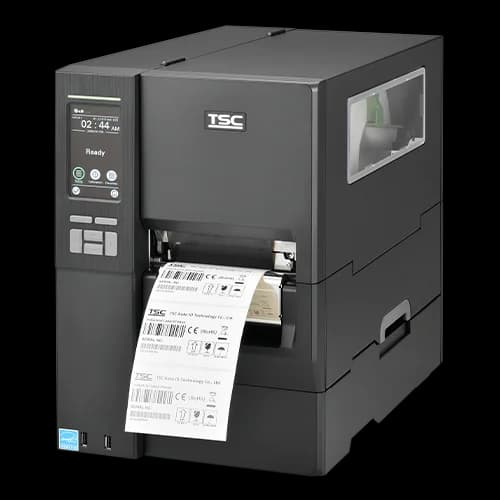
6-inch wide industrial printer, ideal for wide logistics labels and large-area manufacturing labels.
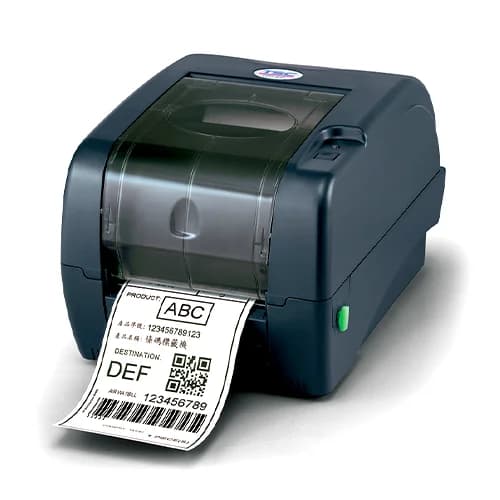
8-inch ultra-wide industrial printer, ideal for GHS chemical labels, large compliance labels and wide logistics labels.
Which one should you pick?
Both TSC MH261 and TSC TTP-286MT are proven barcode printers options sold through JUNJI as an authorized distributor. TSC MH261 suits users who prioritize cost efficiency and Taiwan-local support. TSC TTP-286MT is a better fit for lower-cost rollouts with fast part availability. Request a quote and we'll match you to the exact configuration for your workflow.
Full spec comparison
| Specification | TSC MH261 | TSC TTP-286MT |
|---|---|---|
| Print Method | Direct Thermal / Thermal Transfer | Direct Thermal / Thermal Transfer |
| Resolution | 203 dpi (8 dots/mm) | 203 dpi (8 dots/mm) |
| Print Speed | 305 mm/s (12 ips) | 152 mm/s (6 ips) |
| Print Width | 168 mm (6.61") | 216 mm (8.5") |
| Max Print Length | 14,732 mm (580") | 11,430 mm (450") |
| CPU | High performance 32-bit RISC | 536 MHz 32-bit RISC |
| Memory | 256 MB SDRAM / 512 MB Flash (microSD expandable to 32 GB) | 256 MB SDRAM / 512 MB Flash (SD card expandable to 32 GB) |
| Sensors | Gap | — |
| Media Types | Continuous paper / die cut labels / black mark (bottom only) / folded / notched | Continuous paper / die-cut label / folding / hang tag / notch / black mark / punched |
| Media Width | Max 172.7 mm (6.8") | Max 241.3 mm (9.5") |
| Media Roll OD | Max 203.2 mm (8") | Max 208.3 mm (8.2") |
| Media Core | 38.1 / 76.2 mm (1.5" / 3") | 76.2 mm (3") |
| Ribbon Length | Max 450 m | Max 600 m |
| Ribbon Width | 50.8 – 178 mm (2" – 7") | 109.2 – 254 mm (4.3" – 10") |
| Interface | Parallel | Ethernet + USB 2.0 + USB Host + Parallel + RS-232 Serial; optional Bluetooth |
| Programming Language | TSPL-EZD | TSPL-EZD (compatible with Line Mode, Eltron, Zebra) |
| Display | 4.3" color LCD + buttons | 4.3" color touch LCD + 6 buttons |
| Construction | Die-cast metal printing mechanism, transparent viewing window | Fully die-cast aluminum alloy frame, central reference media processing mechanism |
| Dimensions | 357 (W) × 313 (H) × 514 (D) mm | — |
| Weight | 17.8 kg (39.24 lbs) | — |
| Options | — | Guillotine Cutter/Heavy Duty Cutter (Full Cut) |
Differences highlighted. Data source: JUNJI product catalog (21 spec rows compared).