
TSC MH261 vs TSC T6000e RFID
Side-by-side comparison of barcode printers specs, hardware, and features to help you pick the right one for your use case.
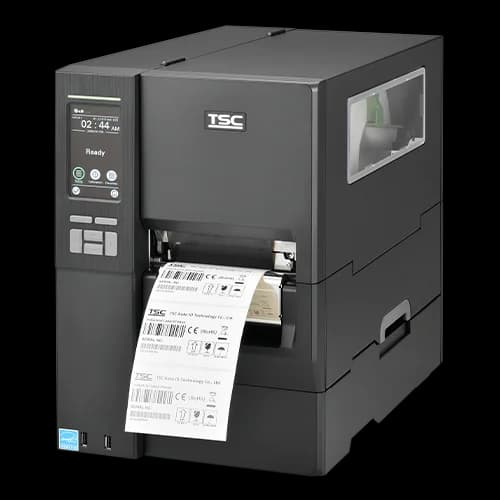
6-inch wide industrial printer, ideal for wide logistics labels and large-area manufacturing labels.
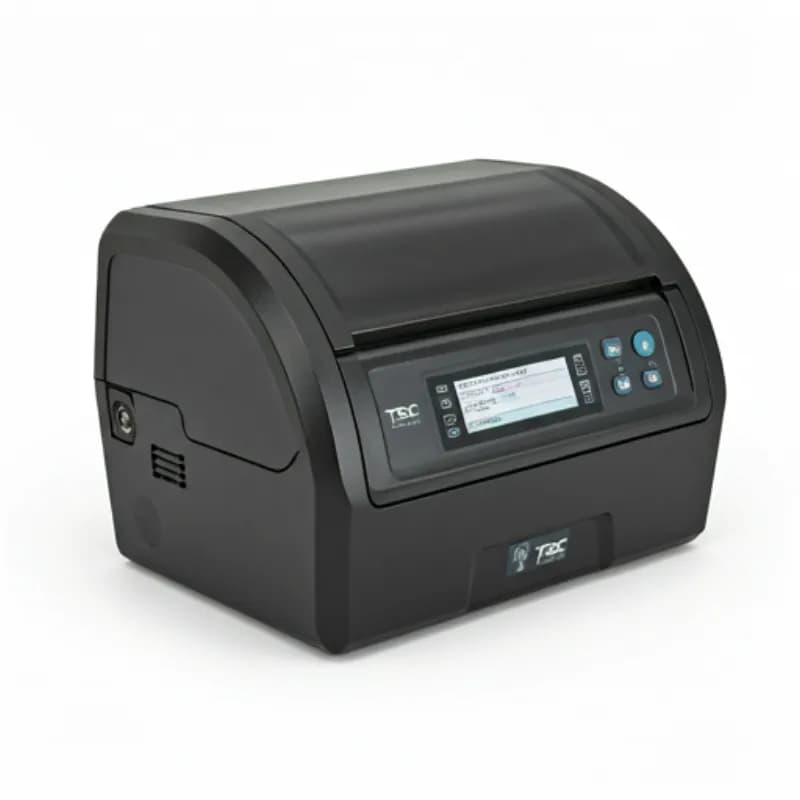
Industrial printer with integrated RFID encoding capability. Supports UHF RFID tag programming and is compatible with Zebra ZPL commands for seamless migration. High-speed 356 mm/s printing with reliable RFID calibration makes it essential for smart warehousing and supply chain tracking.
Which one should you pick?
Both TSC MH261 and TSC T6000e RFID are proven barcode printers options sold through JUNJI as an authorized distributor. TSC MH261 suits users who prioritize cost efficiency and Taiwan-local support. TSC T6000e RFID is a better fit for lower-cost rollouts with fast part availability. Request a quote and we'll match you to the exact configuration for your workflow.
Full spec comparison
| Specification | TSC MH261 | TSC T6000e RFID |
|---|---|---|
| Print Method | Direct Thermal / Thermal Transfer | Direct Thermal / Thermal Transfer |
| Resolution | 203 dpi (8 dots/mm) | 203 / 300 / 600 dpi (depending on model) |
| Print Speed | 305 mm/s (12 ips) | 14 ips / 12 ips / 6 ips |
| Print Width | 168 mm (6.61") | 4-inch: 104 mm; 6-inch: 168 mm |
| Max Print Length | 14,732 mm (580") | — |
| CPU | High performance 32-bit RISC | — |
| Memory | 256 MB SDRAM / 512 MB Flash (microSD expandable to 32 GB) | 512 MB RAM / 128 MB Flash (SD card expandable to 32 GB) |
| Sensors | Gap | — |
| Media Types | Continuous paper / die cut labels / black mark (bottom only) / folded / notched | Continuous paper / folding / die-cut labels / tags / tickets / film / RFID tags |
| Media Width | Max 172.7 mm (6.8") | 4-inch: 114.3 mm (4.5") maximum; 6-inch: 180 mm maximum |
| Media Roll OD | Max 203.2 mm (8") | — |
| Media Core | 38.1 / 76.2 mm (1.5" / 3") | 38.1 – 76.2 mm (1.5" – 3") |
| Ribbon Length | Max 450 m | — |
| Ribbon Width | 50.8 – 178 mm (2" – 7") | — |
| Interface | Parallel | USB 2.0 (Host/Device) + RS-232 Serial + Ethernet; Optional Wi-Fi 802.11 a/b/g/n/ac + GPIO + Parallel |
| Programming Language | TSPL-EZD | Printronix PGL RFID; Compatible with Zebra, Sato, Avery Denison (Monarch) RFID command sets |
| Display | 4.3" color LCD + buttons | Color LCD + buttons |
| Construction | Die-cast metal printing mechanism, transparent viewing window | Die-cast aluminum alloy frame, metal side cover |
| Dimensions | 357 (W) × 313 (H) × 514 (D) mm | — |
| Weight | 17.8 kg (39.24 lbs) | — |
| RFID Protocol | — | UHF EPCglobal Gen2 (ISO 18000-63) |
| RFID Frequency | — | 860 – 960 MHz UHF |
| Supported Inlay | — | Standard UHF Gen2 tags; on-metal RFID asset tags (up to 1.2 mm thick); compatible with validation lists maintained by Printronix (mainstream chips such as Impinj / NXP) |
Differences highlighted. Data source: JUNJI product catalog (23 spec rows compared).