
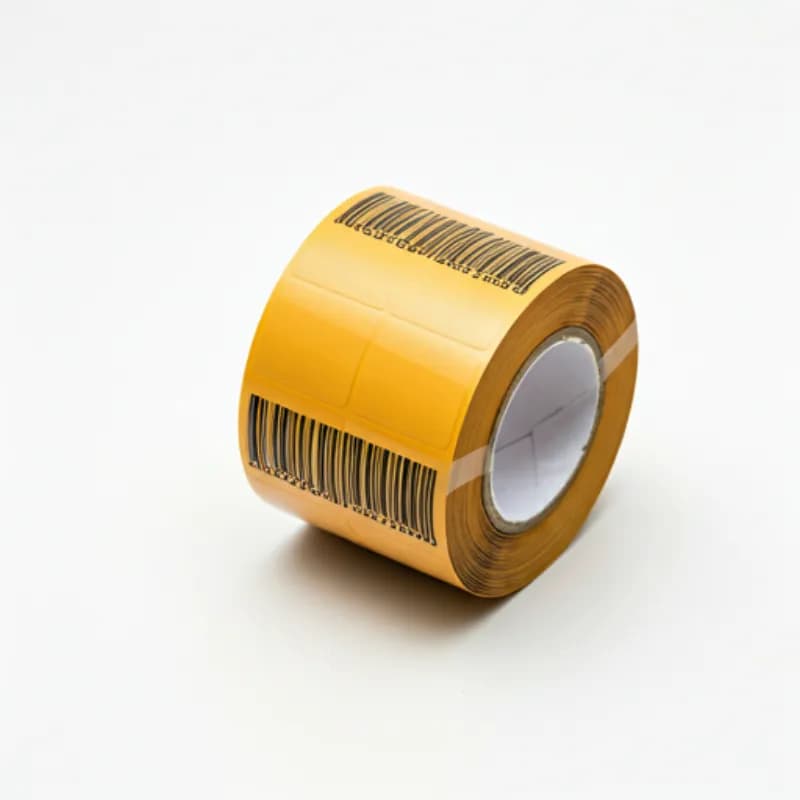
Introduction: When Standard Labels Fail in Extreme Environments
If you've ever worked on a factory production line or in a warehouse, you've likely witnessed these scenarios: freshly applied labels completely charred and peeled off after going through an oven, freezer labels curling up and falling off overnight, or outdoor equipment labels with barcodes rendered unreadable after rain.
The losses caused by these failures far exceed the cost of the labels themselves — production line shutdowns for relabeling, shipping delays leading to customer complaints, and inventory tracking errors causing management chaos. Based on our years of experience serving clients, **the indirect losses from choosing the wrong label are typically 50 to 100 times the label cost itself**.
Special labels aren't luxury items — they're an investment in loss prevention. This article will guide you through the five major categories of special labels, covering material science, application scenarios, and purchasing considerations.
---
1. High-Temperature Labels: The Critical Gatekeeper for Production Lines
Material Analysis
The core of high-temperature labels lies in the heat resistance of both the facestock and adhesive. The two most common materials:
Temperature Ranges
| Material | Short-term (Peak) | Long-term (Continuous) | Price Range |
|----------|-------------------|------------------------|-------------|
| PI (Kapton) | 400°C | 280°C | $$$ |
| High-temp PET | 200°C | 150°C | $$ |
| Standard PET | 120°C | 80°C | $ |
| Special Ceramic | 1000°C+ | 600°C | $$$$ |
Application Scenarios
**SMT Reflow Ovens (260°C peak)**: The most common demand for high-temperature labels. Circuit boards undergo a temperature profile in the reflow oven, typically peaking at 250-260°C for 30-60 seconds. PI material is mandatory — standard PET absolutely cannot withstand this. Labels must maintain barcode readability throughout the entire reflow process.
**Automotive Engine Components (200°C continuous)**: The engine compartment operates at 150-200°C continuously, accompanied by oil contamination and vibration. PI or high-temperature PET can be used, but the adhesive must be a high-temperature formulation, or the label will slide off even if the facestock survives.
**Steel Casting (Ultra-high temperature)**: The casting industry has the most demanding tracking requirements, with workpiece temperatures exceeding 600°C. These scenarios require special ceramic-based labels or metal nameplates with laser engraving.
Key Purchasing Considerations
**Don't just look at facestock temperature rating — check the adhesive too**. High-temperature environments require high-temperature adhesives (typically modified silicone-based). Standard acrylic adhesives fail above 150°C. Additionally, ribbons must use full resin formulations, as wax-based ribbons completely melt at high temperatures.
Common Mistakes
The most frequent error we see: clients using standard white PET labels on PCBs going through SMT reflow ovens. After the oven, all labels are charred and peeled off, barcodes completely unreadable, and the entire batch requires manual relabeling. A "cost-saving" decision causes hours of production line delays.
---
2. Waterproof Labels: It's Not Just About Being Water-Resistant
Material Analysis
Waterproof labels offer more material diversity than high-temperature labels:
Waterproof Levels
Waterproofing covers a wide spectrum, with vastly different requirements for different scenarios:
| Level | Description | Typical Scenarios |
|-------|-------------|-------------------|
| Splash-resistant | Occasional water droplet contact | Bathroom products, kitchen jars |
| Submersion-proof | Hours of water immersion | Beverages in ice buckets, seafood |
| Chemical-resistant | Acid/alkali/solvent resistance | Chemical containers, laboratories |
| Extreme environment | Waterproof + UV + weather-resistant | Outdoor equipment, marine |
Application Scenarios
**Frozen Storage (Frost environments)**: Moisture in freezers forms frost on label surfaces. Repeated frost-thaw cycles will destroy standard labels. Waterproof facestock with freezer adhesive is required.
**Chemical Containers (Solvent resistance needed)**: In chemical warehouses and laboratories, labels may contact various solvents, acids, and bases. These labels must not only be waterproof but also resist specific chemical corrosion. Always verify the label's chemical resistance chart when purchasing.
**Outdoor Equipment (Sun and rain exposure)**: Labels for power equipment, telecom towers, and solar panels must simultaneously resist UV rays, rain, and temperature fluctuations. Typically requires PET facestock with outdoor-grade adhesive and UV protective coating.
**Bathroom and Cleaning Products**: In consumer goods, shampoo, body wash, and similar products have labels in constant high-humidity environments, requiring basic waterproof capability.
Key Purchasing Considerations
**Waterproof facestock alone isn't enough — the adhesive must be waterproof too**. Many people focus only on whether the facestock is waterproof while overlooking the adhesive. Standard acrylic adhesive loses its bonding power when submerged. Waterproof-formulated adhesives are needed. Freezer environments require freezer adhesive that maintains bonding at low temperatures.
Ribbon Pairing
Waterproof labels must be paired with **full resin ribbons**. Content printed with wax ribbons smudges with a wet finger, and mixed ribbons don't offer sufficient water resistance either. Only full resin ribbons keep barcodes and text clear underwater. This is the root cause of many clients buying waterproof labels yet finding them "still not waterproof" — the label itself is waterproof, but the printed content isn't.
---
3. Freezer Labels: The Silent Killer of Low-Temperature Environments
Why They're Particularly Challenging
Freezer labels are difficult because low temperatures simultaneously challenge all three core components:
1. **Facestock**: Standard plastic films become brittle below -30°C, cracking when bent.
2. **Adhesive**: Standard acrylic adhesive starts losing its grip around -10°C and is essentially non-adhesive by -20°C.
3. **Printed Content**: Ribbon-printed ink layers can crack and peel at low temperatures.
Materials
Freezer labels typically use **freezer-grade PP** (polypropylene) as the facestock, paired with **low-temperature strong adhesive**. This adhesive is specially formulated to maintain sufficient bonding force at -40°C or even lower.
For ultra-low temperature applications (such as liquid nitrogen at -196°C), **Cryo-grade** special labels are required, with both facestock and adhesive specifically engineered for extreme cold.
Application Scenarios
**Frozen Food Packaging (-18°C to -25°C)**: The highest volume demand for freezer labels. Supermarket freezer cabinets typically operate at -18°C to -25°C, and labels must maintain adhesion and barcode readability within this range.
**Cold Chain Logistics (-30°C)**: During cold chain logistics, cargo may be exposed to -30°C environments. Logistics labels must not only withstand low temperatures but also be quickly readable by scanning devices.
**Liquid Nitrogen Storage (-196°C)**: Biotech laboratories, blood banks, and stem cell storage facilities require long-term sample preservation in liquid nitrogen. Cryo-grade labels are the only option — standard freezer labels will shatter and fall off at this temperature.
**Blood Sample Tubes**: Medical specimen labels have particularly strict requirements — they must be cold-resistant, firmly adhere to small-diameter tube walls, and maintain barcode clarity after extended freezing.
Key Purchasing Considerations
**Labeling Temperature vs. Service Temperature**: This is the most overlooked critical factor.
If your workflow involves labeling inside the freezer, be sure to specify this when ordering. Otherwise, the labels you receive may be very sticky at room temperature but completely non-adhesive in the cold.
Common Mistakes
The most typical case: a food manufacturer using standard coated paper labels on frozen dumpling packaging. They look perfectly secure at room temperature, but after overnight storage at -18°C, every single label has fallen off onto the floor. Standard adhesive completely loses its bonding power at low temperatures. In one night, thousands of packages require relabeling — the labor and time costs are a hundred times the label cost.
---
4. RFID Labels: Not Just Labels — It's a Complete System
RFID (Radio Frequency Identification) labels differ fundamentally from traditional barcode labels: they're not just stickers but miniature electronic devices containing chips and antennas. When selecting RFID labels, you must think from a whole-system perspective.
UHF vs HF vs NFC
| Type | Frequency | Read Range | Typical Applications | Unit Cost |
|------|-----------|------------|---------------------|-----------|
| UHF | 860-960 MHz | 3-12 meters | Warehouse inventory, logistics | $$ |
| HF | 13.56 MHz | 10-30 cm | Library management, access control | $ |
| NFC | 13.56 MHz | < 5 cm | Consumer engagement, mobile payment | $ |
**UHF (Ultra High Frequency)**: Long read range, capable of reading hundreds of tags simultaneously — the top choice for warehouse inventory. A single handheld reader can inventory an entire shelf in seconds.
**HF (High Frequency)**: Shorter read range but superior interference resistance, particularly suitable for metal or liquid environments. Library systems predominantly use HF tags.
**NFC (Near Field Communication)**: Technically a subset of HF, its key feature is direct smartphone readability. Brands can apply NFC tags to products, allowing consumers to tap their phones for product pages, authenticity verification, or marketing campaigns.
Special Requirements
**Metal Surfaces**: Standard RFID tags placed directly on metal surfaces completely fail (the antenna's electromagnetic field is disrupted by metal). **On-metal tags** are required — these include a built-in isolation layer (typically foam or special coating) separating the antenna from the metal surface.
**High-Temperature RFID**: Certain industrial scenarios require RFID tags to operate continuously above 200°C. These tags use special encapsulation with heat-hardened chips and antennas.
**Wash-Resistant RFID**: Hotel linen management and uniform management require tags that withstand hundreds of industrial wash cycles (60-80°C water + detergent + drying). These tags are typically encapsulated in silicone or special plastics.
Key Purchasing Considerations
**Confirm reader compatibility first, then choose tags**. The core of an RFID system is the communication protocol between reader and tag. Different reader brands may support different standards (such as EPC Gen2), and tag chips come in various models (such as Impinj Monza, NXP UCODE). First confirm the specifications of your existing or planned reader, then select compatible tags to avoid the situation of "bought tags but can't read them."
---
5. Tamper-Evident Labels: The Last Line of Brand Defense
Holographic Labels
Using optical interference principles to produce 3D holographic patterns with unique light-shadow effects. The key feature is that they **cannot be replicated by photocopiers or scanners** — copies produce only flat images without the 3D light effects. Commonly used for anti-counterfeiting stickers on high-value products.
VOID Tamper-Evident Labels
When removed, they leave "VOID" text or preset patterns on the substrate surface, and the label itself is destroyed and cannot be reused. Ideal for warranty seals, package closures, and scenarios requiring detection of "has this been opened?"
Destructible Labels
Extremely fragile facestock that shatters into countless small pieces when removal is attempted, making it impossible to cleanly remove and reapply. Commonly used for warranty stickers on electronics — a broken warranty sticker indicates the product has been opened for repair.
Application Scenarios
---
6. Label + Ribbon Pairing Formula
Choosing the right label facestock is only step one — ribbon pairing is equally critical. Wrong ribbon pairing leads to unclear printing, poor durability, or complete inability to print.
| Label Facestock | Recommended Ribbon | Characteristics | Cost |
|-----------------|-------------------|-----------------|------|
| Coated paper (general) | Wax ribbon | Economical, suitable for room-temperature environments | $ |
| Coated paper (scratch-resistant) | Wax-resin hybrid | Scratch-resistant, suitable for logistics labels | $$ |
| Synthetic paper / PP | Hybrid or full resin | Waterproof and scratch-proof, for freezer and humid environments | $$ ~ $$$ |
| PET film | Full resin ribbon | High-temperature and chemical resistant | $$$ |
| PI (Kapton) | Full resin (high-temp) | Survives SMT reflow without peeling or fading | $$$$ |
**Pairing Principle**: The more specialized the facestock, the higher the ribbon grade needs to be. Never use wax ribbons on waterproof labels — it defeats the entire purpose.
If using thermal direct labels (no ribbon needed), also note the thermal coating's durability. Standard thermal paper is not water-resistant, heat-resistant, or UV-resistant, suitable only for short-term use (such as shipping labels).
---
7. How to Test Whether a Label Is Right for You
No matter how impressive the spec sheet looks, **actual testing is the only truth**.
Request Free Samples
Reputable label suppliers offer free sampling services. Simply provide:
Real-Environment Testing
After receiving samples, always test in your **actual operating environment** — don't just inspect them in the office:
Recommended Testing Duration
Don't skip testing because you're "rushing to ship." Three days of testing is better than having an entire shipment returned for relabeling.
---
Conclusion: The Hidden Cost of Choosing Wrong
Labels typically represent less than 1% of total product cost. But choosing the wrong label can be extraordinarily expensive:
Rather than bearing these risks, invest a little more time and cost during the selection phase to choose the right special labels.
Junji provides comprehensive special label solutions — from material selection and ribbon pairing to free sample testing. Our technical team will help you find the optimal label solution for your needs.
Contact us today to request free samples and let us solve your labeling challenges.